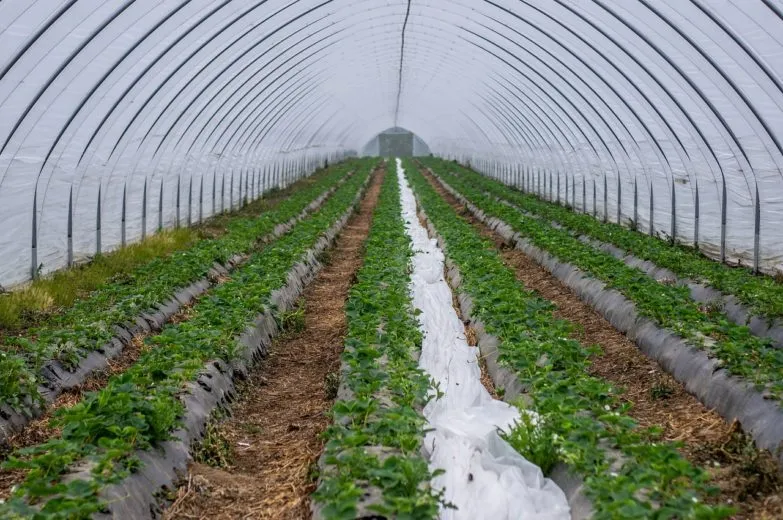
The traditional agriculture sector is primarily driven by resource-intensive practices which are degrading the environment and depleting natural resources faster. It is unfortunate that the sector which feeds millions of people around the world is upsetting our ecosystem. At the same time, it is also under threat due to ecological imbalance and climate change. Farmers are grappling with challenges of poor soil fertility, water scarcity, a decrease in arable land, and lower crop yield.
The need of the hour is to make the agriculture sector sustainable through resource-efficient practices. Green farming is a crucial step in this direction. Green farming refers to the adoption of technologies that reduce the carbon footprint of agriculture and increase the production of crops with better utilization and conservation of resources.
Let’s take a look at these six green farming practices.
1. Vertical Farming
Vertical farming is an agricultural technique to grow crops in vertically stacked layers (unlike conventional horizontal farming) in a climate-controlled indoor environment. Cultivators can grow more plants in the same area which helps in space maximization and production scaling.
Vertical farming uses LED lights known to emit a plant-friendly light spectrum. LED lights not only maximize energy use but also enhance the quality and quantity of crops. Since plants grow in a controlled climate, they need less pesticides, water and soil.
Most importantly, vertical farming makes the year-round production of crops possible. Cultivators leverage artificial intelligence and digital monitoring to control indoor climate, temperature and other farming factors.
2. Organic and Biodynamic Farming
Organic farming is a crop production technique which uses organic inputs such as crop residues, green manure, and bio-pesticides instead of synthetic or chemical-based inputs. This helps in improving soil health, enhancing the nutritional quality of crops, and reducing dependence on fossil fuels.
Biodynamic farming is an emerging area of organic farming which draws its fundamentals from ancient agriculture wisdom. Apart from incorporating the principles of organic farming, biodynamic farming also aligns the planting and harvesting time with planetary cosmic rhythms. Hence, digital technologies and apps that can help farmers predict weather changes and understand planetary movements can be game changers.
3. Renewable Energy
There can’t be a better natural fit for agriculture than renewable energy. Farmers can use solar, wind, hydroelectric, biomass, and geothermal energy technologies to generate their own electricity and heating on their farms. Here are some examples of renewable energy technologies that can shift the agriculture sector towards green farming:
Solar Energy: Solar panels can produce power for lights, water pumps, electric fencing, and other equipment that run on electricity. Solar heating systems can generate heat for livestock shelters, greenhouses and dry crops for preservation. Solar water heaters can be useful to get hot water for cleaning and sterilization of farm equipment.
Wind Energy: Farmers can install wind turbines on their farms to produce electricity. They can even earn additional income by selling this electricity to private or government grids. The wind turbines installed at the edge of fields create air turbulence leading to cool air during the day and warm air at night. This temperature variation creates favorable growth conditions for crops. Moreover, wind turbines also enhance the capital value of land for farmers.
Hydroelectric Energy: If the farm has a reliable and continuous source of flowing water, farmers can install small hydroelectric systems or turbines to produce electricity.
Geothermal Energy: Farms with wells dug deep into underground reservoirs can bring hot water and steam to the surface to generate geothermal energy. Farmers can use this energy for greenhouse heating, crop drying, fish farming, milk pasteurization, and soil sterilization.
Biomass Energy: Farmers can generate biomass feedstock from crops such as sunflowers, corn, switch grass, and soy. They can burn this biomass to create heat, convert it into electricity, or process it into biofuel.
4. Integrated Pest Management (IPM)
IPM is a sustainable farming approach combining various natural pest control techniques. It enables farmers to prevent pest infestations naturally without disrupting the environment or crop growth. Some of these techniques include crop rotation, row spacing, and conservation of natural pest enemies (ants, lady beetles, bees).
Technologies such as remote sensing, drones, and spatial resolutions are also helping farmers in IPM. For example, drones can be useful in targeted spraying to remove pests from a specific patch of the field. Remote sensing can identify pest-infested plants which can otherwise be a hassle on large agricultural lands. Spatial resolution can provide high-resolution images to detect large-scale insect damage or outbreak.
5. Electric Field Equipment
The farm field equipment usually runs on petrol and diesel which produce greenhouse emissions and are also becoming scarce. Green farming is gradually shifting focus to electric-powered machinery, tractors, and handheld tools to address this environmental concern. The electric field equipment will also reduce surface-level pollution which is detrimental to crop yield.
6. Permaculture
A word play on ‘permanent’ and ‘agriculture’, permaculture is an innovative farming technique to design sustainable, socio-ecological, and conscious landscapes that mimic natural ecosystems. It follows three principles — care for the earth, care for people, and fair distribution.
Many critics opine that permaculture is not a viable option as it is complex and expensive. However, an article published on the World Economic Forum website contradicts this criticism and states that technologies such as artificial intelligence, robotics, sensors, data analysis, and advanced breeding techniques can solve the problems associated with permaculture.
Conclusion
Given that agriculture is one of the most essential sectors for human survival, it needs to be sustainable. Green farming technologies can make sustainability achievable through the best use of natural resources and nurturing of healthy ecosystems.
Syngenta Innovation Dialogues is part of the Shoots by Syngenta Accelerator initiative
The Syngenta Group Startup Accelerator program, part of the larger “Shoots by Syngenta” platform, provides early-stage companies with a supportive #ecosystem to develop new #agriculture #technologies. It includes giving #startups the opportunity to pilot their technology at Syngenta’s Farm of the Future and select grower locations globally, mentorship from our business leaders, the ability to connect with industry experts, as well as resources and funding to accelerate their growth and impact.
At Syngenta Group, we believe in #innovation and #collaboration. If you think you have what it takes, then we have the platform for you!
The Shoots by Syngenta Program is managed for Syngenta by Excelerate.

%201.webp)