Connecting the Unconnected Farmers with No Internet

Agri Technology
Agritech
Agritech Companies
Agriculture
August 15, 2023
5 min read

Technology is driving revolutionary transformations in the agriculture sector. It is empowering farmers to access modern tools and techniques, and real-time information to farm smartly and boost farm productivity. However, millions of farmers across the world, especially in rural regions are still unable to harvest the benefits of technology.

One of the reasons is the lack of internet access. It could be due to any of the following reasons:

  • Farmers don’t own smartphones.
  • There is no internet service provider.
  • The coverage network is poor and unreliable.
  • Farmers resist using the internet.
  • Farmers can’t afford the cost of smartphones or data plans.

Imagine how much these farmers are missing out on the digital innovation opportunities to grow their yield and income! Hence, it becomes imperative to connect the unconnected farmers and level the playing field for them. Here are some ways to make this possible:

SMS Services

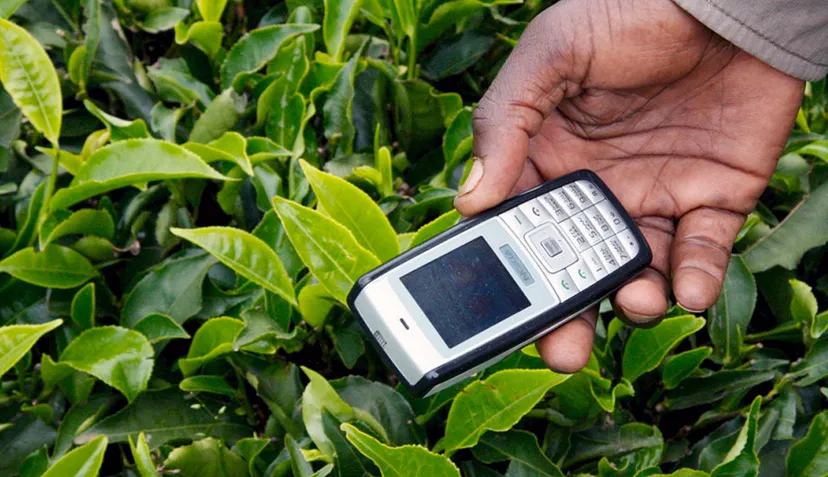
SMS service is a common feature of all mobile phones, irrespective of the brand and model. Farmers with basic mobile phones and 2G networks can get updates and alerts on weather, crop advisory, market prices, government policies, etc.

For instance, an SMS campaign helped 80% of farmers in Kenya and Uganda learn new ways to tackle fall armyworm attacks. A free peer-to-peer service helps small-scale farmers to share information via SMS, thereby enabling the dissemination of crowdsourced knowledge.

Voice-Based Helplines

Farmers with basic cell phones or landline phones can access information by dialing toll-free helpline numbers. These numbers connect them to agricultural experts who listen to their queries and provide appropriate advice.

Some farming solution providers also give the facility of a ‘missed call’ service so that farmers can save money on their phone bills. Gramophone, an Indian agtech startup, leverages this concept to reach the unconnected farmers.

Community TVs, Radios, and Computer Networks

Several rural and remote agricultural regions have community centers equipped with TV sets, radios, or computers with internet connection. These centers run by the locals or government can broadcast information at a mass level, especially during emergencies or weather crises.

A fine example is Farm Radio, an international non-profit organization that partners with radio stations to educate African farming communities.

Satellite Internet

Satellite broadband is proving to be a boon to agricultural communities in locations with zero or poor internet access. This facility doesn’t need local infrastructure. It uses a satellite in space to send and receive signals to an internet service provider who then routes the signal to a modem at the farmer’s home. It also doesn’t require any cable wiring.

A farm in one of the most off-grid locations in rural New Zealand has been able to do things faster and better after switching to satellite internet.

Digital Aggregation

On-field farming trainers or agro products dealers can be equipped with smartphones or any other portable handheld devices with an internet connection. These trainers or dealers can show pre-recorded audio-visual content on their devices to the farmers.

Conclusion

The future of farmers relies on connectivity. It is only then they can maintain a continuous supply of food and help the world tackle the challenge of food security. Hence, government, agtech startups, private enterprises, development agencies, agricultural communities, and other stakeholders should collaborate to establish last-mile infrastructure to bridge the internet connectivity gap.

Syngenta Innovation Dialogues is part of the Shoots by Syngenta Accelerator initiative

The Syngenta Group Startup Accelerator program, part of the larger “Shoots by Syngenta” platform, provides early-stage companies with a supportive #ecosystem to develop new #agriculture #technologies. It includes giving #startups the opportunity to pilot their technology at Syngenta’s Farm of the Future and select grower locations globally, mentorship from our business leaders, the ability to connect with industry experts, as well as resources and funding to accelerate their growth and impact.

At Syngenta Group, we believe in #innovation and #collaboration. If you think you have what it takes, then we have the platform for you!

The Shoots by Syngenta Program is managed for Syngenta by Excelerate.
Latest Blogs

September 17, 2023
5 min read

Strengthening Last Mile Supply Chain for Smallholder Farmers

Agri Technology
Agritech
Agriculture
Agritech Companies
Sustainability
According to a publication by the International Fund for Agricultural Development (IFAD), smallholder farmers manage over 80% of the world’s estimated 500 million small farms and supply more than 80% of the food to the world. Yet, these farmers are often neglected because they reside in remote and environmentally fragile locations.While technological innovations are transforming the agriculture sector in a revolutionary way, the last mile supply chain is still the weak link. As a result, smallholder farmers continue to grapple with resource constraints and farm inefficiency both of which could have serious implications on growing population and climate change challenges.The entire agricultural ecosystem needs to come together to improve the last mile supply chain. Here are some strategies to do it right:Market AccessSmallholder farmers usually rely on local markets in their vicinity to procure seeds, fertilizers, and farm machinery and tools and sell their harvest. One of the main reasons is that they lack access to semi-urban and urban markets due to poor road connectivity and inadequate transport alternatives.The public and private entities should build roads and transport services to reduce the supply chain gap. Quality input resources can be made available to the farmers at their village shops or exclusive agro-kiosks.Financial AccessA majority of smallholder farmers do not have access to institutional credit and insurance services. There are either no financial institutions in their areas or they lack inclusion in formal banking and insurance. The financial institutions are apprehensive about taking risks with farmers due to a lack of proper documentation and credibility. Even if they do provide credit or insurance, it is expensive for farmers.It is necessary to set up easy-to-access, easy-to-understand, easy-to-afford financial services for the farmers. There is a need to come up with a mechanism that clears land titles/disputes and gives digital identities to farmers to eliminate documentation-related issues for availing credit.
read more
August 31, 2023
5 min read

5 Ways Farm Management Software Can Boost Productivity and Profitability for Farmers

Agriculture
Agritech
Agritech Companies
Agritech Startup
Agri Technology
Farming has always comprised a multitude of activities and processes, right from tilling to harvesting. However, today, farmers are under mounting pressure to make farming efficient due to the global food security and climate change challenges. This is possible only when farmers automate and streamline day-to-day operations. Farm management software is a smart and valuable tool that can help do this.Let’s take a look at various ways farm management software can empower farmers and enhance farm capabilities:Data Analysis & ManagementFarms generate a humungous amount of data on soil, weather, crop health, pests, etc. This data is of no use if it can’t be translated into actionable insights. Farm management software can digitize the entire data and put it in electronic format for easy and quick analysis in a few clicks. Based on these insights, farmers can make informed and real-time decisions.
read more
August 23, 2023
5 min read

Is Urbanization a Threat or an Opportunity for Agriculture?

Agri Technology
Agritech Companies
Agritech
Sustainability
Agriculture is predominantly a rural economic activity, especially in developing and underdeveloped nations. It plays a crucial role in uplifting farming communities and rural establishments. However, the growing level of urbanization has raised serious concerns regarding its effects on agriculture. Currently, 56% of the world’s population lives in cities. It is expected that the urban population will more than double its current size by 2050. While urban development is considered the engine of economic growth, it also brings a fair share of challenges in terms of making more space and creating livelihoods. It puts pressure on natural resources which in turn can adversely impact the agriculture sector. At the same time, cities are also the hub of technological innovation, policy making, and higher productivity which are necessary to drive rural growth. Hence, it is challenging to determine whether urbanization is a threat or an opportunity for agriculture. Let’s explore both perspectives for a better understanding.
read more