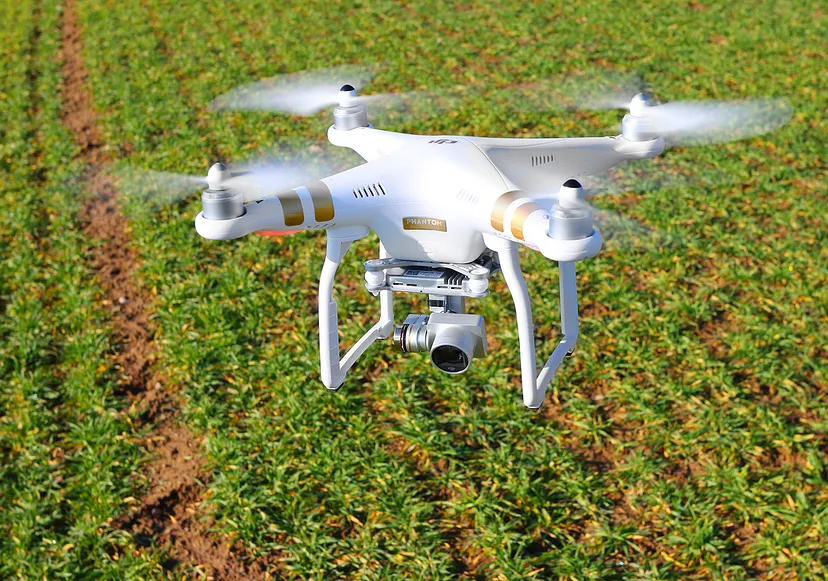
A farmer in India deployed a drone to spray micronutrients and get a better yield from his field. Drones are helping farmers in Ghana spray fertilizers, map scarce water resources, and ward off birds. A farmer in Australia is using a drone to plant sunflower seeds on a large scale.
These are just a few success stories of drone technology in agriculture. It is not surprising that the demand for these unmanned aerial vehicles is on the rise in the agriculture sector. In fact, the agriculture drone market is expected to reach USD 5.7 billion by 2025.
Drones have in-built high-resolution infrared cameras, multi-spectral sensors, and automated real-time data-capture features which can be useful for growers in precision farming. Let’s take a look at various ways drones are revolutionizing agriculture.
Spraying
Growers can use drones to spray fertilizers, pesticides, and herbicides with unparalleled accuracy at targeted specific locations and even on the most challenging terrains. Drones can minimize wastage and reduce chemical costs, thereby optimizing resource allocation.
Drones can also take the load off manual backpack sprayers and allow growers to free up labor for more productive work.
Crop Monitoring
Crop monitoring is a time-consuming task, especially in farms with large acreage. Drones can be useful to identify the right time to apply fertilizers; detect pest attacks and plant diseases; monitor crop growth and density; assess nutrient deficiencies; and track the effects of weather conditions on crops.
Drone-based crop monitoring can help growers in early and timely interventions.
Soil Analysis and Mapping
Soil is the primary medium for the movement of water and nutrients in the crops. Traditionally, soil samples are tested in labs to determine their nutrient composition, moisture content, and other physical and chemical properties. Soil analysis can be a tedious job in large fields with different topographies or soil structures.
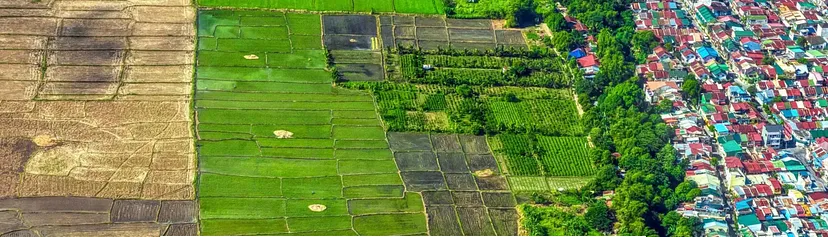
Drones can enable digital soil analysis and mapping using their remote-sensing cameras and data-driven algorithms. They can highlight even the minutest differences in soil composition. This information can empower farmers to minimize surprise elements and determine irrigation strategies accordingly.
Seed Planting
Drones can plant seeds more quickly and efficiently than traditional seeding techniques. Planting drones can fire seeds automatically and at lightning speed in a way that seeds have a high chance of taking the roots. They follow a particular planting pattern to ensure the correct spacing between each seed for homogeneous growth.
Drones can even monitor the health of sprouts and saplings after plantation.
Irrigation Management
Agriculture irrigation accounts for 70% of water use globally. Given that water is increasingly becoming a scarce resource, its efficient utilization is vital in agriculture. Drones equipped with thermal, hyperspectral, or multispectral sensors can detect water-stressed patches in the field. They can also identify possible water leaks and pooling.
Farmers can optimize their irrigation practices to deliver precise amounts of water and conserve water.
Livestock Management
Growers often employ dedicated staff to keep a close eye on the animals roaming on the field or non-farm/wild animals intruding on the field. This workforce usually is stationed at specific sites or moves on horseback and in vehicles for livestock monitoring.
Since drones are fitted with cameras, they can do a better job of livestock surveillance, cattle counting, and finding lost or injured animals. Drones can even track cattle’s grazing, health, and behavioral pattern.
Conclusion
Drones are proving to be an indispensable technology to enhance farm productivity, reduce costs, and gather accurate field data. However, the use of drones has regulatory restrictions and there is a steep learning curve for growers. Hence, it is necessary to make drones easily accessible and adaptable for growers to optimize their use.
Syngenta Innovation Dialogues is part of the Shoots by Syngenta Accelerator initiative
The Syngenta Group Startup Accelerator program, part of the larger “Shoots by Syngenta” platform, provides early-stage companies with a supportive #ecosystem to develop new #agriculture #technologies. It includes giving #startups the opportunity to pilot their technology at Syngenta’s Farm of the Future and select grower locations globally, mentorship from our business leaders, the ability to connect with industry experts, as well as resources and funding to accelerate their growth and impact.
At Syngenta Group, we believe in #innovation and #collaboration. If you think you have what it takes, then we have the platform for you!
The Shoots by Syngenta Program is managed for Syngenta by Excelerate.

%201.webp)