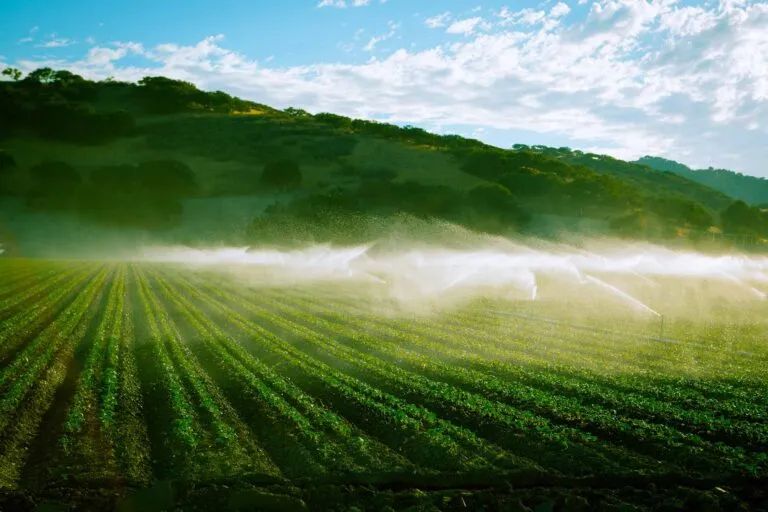
The agriculture sector consumes a significant share of the usable water available in the world. The growers utilize water to cultivate crops, raise livestock, pesticide and fertilizer application, hydroelectricity generation, and several other agricultural activities. According to the World Bank estimate, irrigated agriculture represents 20% of the total cultivated land. It is also a major contributor to 40% of the total food production worldwide. It also accounts for 70% of freshwater withdrawal globally.
The water demand is expected to rise in the future to meet food security challenges in the wake of the growing world population. However, water is already becoming a scarce and polluted resource indicating that it will put the agriculture sector under tremendous pressure and constraints. As it is, the sector often receives criticism for high wastage and inefficient use of water at the farm level encouraged by subsidized low charges for water use or low energy tariffs for pumping.
Efficient and sustainable water management is the need of the hour and technology can play a vital role to achieve it. Let’s understand this further in detail.
Meaning of Water Technology in Agriculture
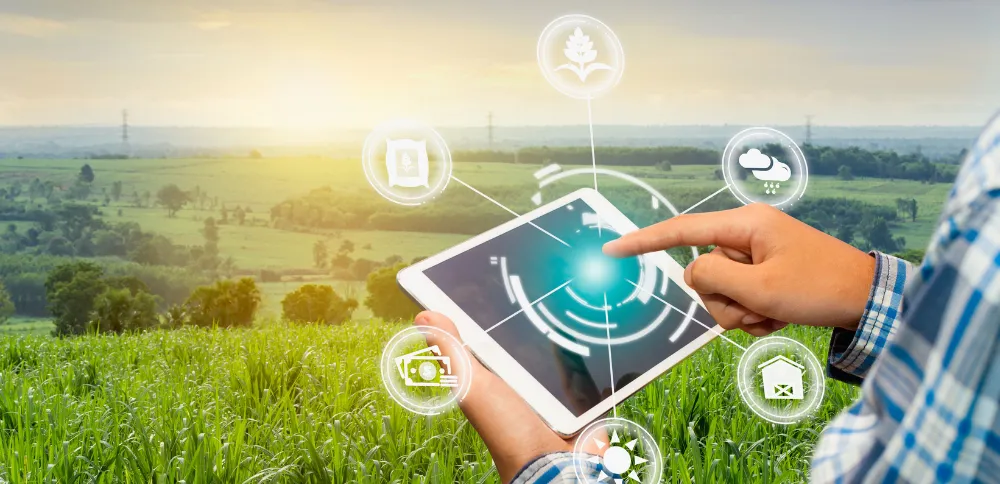
Water technology in agriculture refers to digital innovations that optimize the use, conservation, and distribution of water while minimizing its waste and damage to the environment. It also entails restoring, upholding, or enhancing the quality of water resources.
Ways Water Technologies Can Make Agriculture Smart
Here are five ways water technologies can solve the water crisis in agriculture.
1. Climate Resilience
Currently, agriculture is responsible for 19–29% of total greenhouse emissions. These emissions result in unpredictable weather changes and rising global temperatures which further increase the probability of droughts, dry spells, etc.
Water technologies related to rainwater collection and storage can enable growers to adapt to these changes. They can continue to produce food even during water scarcity.
2. Precision Irrigation
Traditional irrigation methods are time-consuming and expensive. Since the water is sprayed on the surface (around the soil and not the plant roots), it doesn’t give much benefit. More importantly, they cause uneven distribution of water in the crops.
Precision irrigation technologies such as drip irrigation and micro-sprinklers deliver water to the roots of crops in the right dose at the right time. The water is supplied underground as a result of which soil doesn’t lose moisture and water doesn’t evaporate. This way, water technology saves water wastage, protects the soil, and gives a better yield.
3. Water Conservation
Most farmers either lack sensitivity or awareness about water conservation. So, they hardly use any water conservation technique other than storing water in tanks, wells, or containers on a need basis.
Modern water conservation technologies such as rainwater harvesting, dry farming, conservation tillage, laser field leveling, and soil sensors can prevent water loss. Farming lands with high water tables or floods can also conserve water through efficient drainage structures such as bioreactors and saturated buffers. Capture and recycle systems can also help in water conservation and reusing the water for irrigation through a filtration method.
4. Crop Monitoring
Crop monitoring is a major issue when the farm size is large or grows a variety of crops. So, it is also difficult to determine the water efficiency.
Technological advancements such as sensors, audio device leak detection, and Geographical Information Systems (GIS) can collect real-time data on soil moisture, water requirement, humidity, and temperature. Based on this information, growers can determine the right amount of irrigation water and optimize the irrigation scheduling.
5. Water Quality
Contamination of irrigation water can occur in various ways and it can adversely impact the quality and quantity of crop output. Poor water quality can also spread bacteria, viruses, and parasites through crops and livestock.
New-age water treatment technologies such as antimicrobial nanotechnology, ultraviolet purification, Internet of Things (IoT) sensors, and acoustic nanotubes can improve water quality. They can help understand water chemistry in terms of pH, chlorine concentration, and organic matter to take necessary steps to treat them for safe use.
Conclusion
Water is a core natural asset for all economic, environmental, and social activities. As the world gets drier and water pinch becomes a reality, its impact can be felt in the agriculture sector too. Water technologies can be instrumental in leading agriculture in a sustainable direction.
Syngenta Innovation Dialogues is part of the Shoots by Syngenta Accelerator initiative
The Syngenta Group Startup Accelerator program, part of the larger “Shoots by Syngenta” platform, provides early-stage companies with a supportive #ecosystem to develop new #agriculture #technologies. It includes giving #startups the opportunity to pilot their technology at Syngenta’s Farm of the Future and select grower locations globally, mentorship from our business leaders, the ability to connect with industry experts, as well as resources and funding to accelerate their growth and impact.
At Syngenta Group, we believe in #innovation and #collaboration. If you think you have what it takes, then we have the platform for you!

%201.webp)