The Food and Agriculture Organization (FAO) of the United Nations published a journal article which explored the idea of precision agriculture as a new technology in crop production. That was the year 1999. Since then, precision farming has come a long way and is fast gaining momentum as a cutting-edge farming approach. It is now expected to grow at a CAGR of 7.9% to be valued at USD 15.6 billion in 2030.
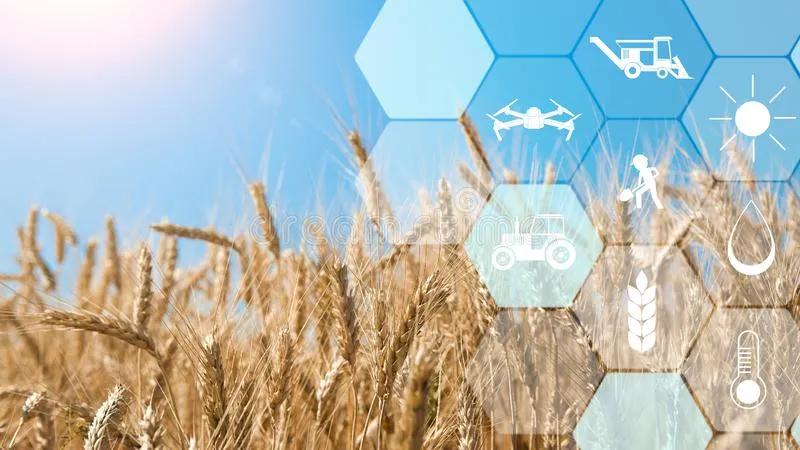
Precision agriculture empowers farmers to manage resources and field irregularities in real-time and effectively through the 5Rs- right time, right manner, right place, right amount, and right source. So, it leads to substantial savings in inputs such as labor, seeds, water, fertilizers, pesticides, fuel, and land.
The world is battling with challenges such as food security and climate change. Precision agriculture can help farmers (especially those who have small farm sizes) grow more and healthier crops with lesser resources as per site-specific conditions. That’s why; it is also called climate-smart and sustainable agriculture practice.
Advancements in technologies such as Artificial Intelligence (AI), Machine Learning (MI), the Internet of Things (IoT), big data, and predictive analytics have paved way for groundbreaking innovations in precision agriculture. Let’s take a look at seven key innovations that have taken place.
GPS technology gives accurate data about the field to farmers. They can precisely navigate to specific locations on the farm to monitor crops, livestock, equipment, and labor with the help of data. GPS can assist them in soil sampling to map out crop patches which need more nutritional content. Farmers can also identify weed and pest infestations through GPS.
This way, farmers don’t have to physically move around the field much for supervision. This leads to significant savings in cost, time, and effort. They can micromanage the field activities seamlessly with GPS to get maximum output per acre while reducing environmental impact.
GIS allows farmers to do digital mapping of their fields in the form of different zones based on crop types, soil characteristics, water requirements, weed and pest infestation, etc. They can visualize the entire field on a map, identify problem areas, and customize farming approaches for each zone. GIS can also give a spatial analysis of multiple variables and data layers related to climate conditions, wind direction, topography, soil erosion, slope, and elevation.
GIS provides all this information through satellite images at the fingertips. This is highly useful for farmers to make smart and informed decisions based on where, what, and when of their fields.
A yield monitor is a type of electronic sensor for site-specific crop management in precision farming. It is integrated with GPS technology and is usually installed on tractors or harvesting equipment. It can measure spatial yield variability within a single field. It can also record the actual quantity of grain being harvested, the moisture content in grains, and the speed of the combined harvester.
Yield monitors can be useful to make actionable decisions regarding soil tillage, irrigation management, and crop rotation. Farmers can also use this data to get agricultural finance or test a new crop.
VRA leverages GPS, GIS, and sensors for the automated application of seeds, water, agrochemicals, and fertilizers to a particular crop variety or zone at varying rates. It saves ample time for farmers in changing application rates manually. It can help them identify low, medium and high productivity zones in their field to determine where and at what rate they need to apply inputs. VRA can also detect crop diseases and manage weeds.
VRA-based precision farming empowers farmers to maximize the application of inputs to each zone and reduce input wastage. This in turn enhances yield potential and improves the environmental impact of agriculture.
Agriculture accounts for 19–29% of total greenhouse emissions. Emission-reducing technologies in precision farming can make agriculture more climate-resilient and sustainable. Carbon sequestration is one such technology. It can capture and store atmospheric carbon dioxide instead of releasing it into the air. It can improve soil health, prevent soil erosion, increase biodiversity, enhance crop quality, and restore degraded oils.
Shelf life-extension technology is a new development in precision agriculture. This technology can prolong the life of fruits, vegetables, and grains, thereby reducing food wastage. It is estimated that if food waste was a country, it would be the third-highest emitter of greenhouse emissions after the US and China! So, shelf life extension technology certainly holds immense potential in maintaining ecological balance through agriculture.
Autonomous execution of farming activities can help farmers optimize and standardize their operations, and manage labor shortages. Robotics and drones are two autonomous systems that are becoming increasingly popular for precision agriculture.
Agricultural robots can do manual and repetitive tasks such as sowing seeds, harvesting, spraying pesticides, removing weeds, milking, etc. Farmers with large farms can deploy these robots in a ‘swarm’ to increase efficiency and productivity. Drones can supervise the entire farm and collect data for planting, irrigation planning, resource distribution, etc. Drones can also map the field, monitor crops, and spray agrochemicals.
Self-driving tractors are also the next big thing in precision farming in large farm areas. They have an in-built intelligence system that can gather farm data. They can also relieve farmers from working long hours, especially in unfavorable climate conditions.
Precision agriculture will influence the future of food production through the optimization of resources while fighting climate change and protecting the environment. Technological innovations will level up precision farming and deliver much-need food security to the burgeoning population. However, it is equally important to educate farmers about on adoption of precision agriculture and also encourage more startups to develop innovative farming technologies.
The Syngenta Group Startup Accelerator program, part of the larger “Shoots by Syngenta” platform, provides early-stage companies with a supportive #ecosystem to develop new #agriculture #technologies. It includes giving #startups the opportunity to pilot their technology at Syngenta’s Farm of the Future and select grower locations globally, mentorship from our business leaders, the ability to connect with industry experts, as well as resources and funding to accelerate their growth and impact.
At Syngenta Group, we believe in #innovation and #collaboration. If you think you have what it takes, then we have the platform for you!
The Shoots by Syngenta Program is managed for Syngenta by Excelerate.

%201.webp)