Climate change and the depletion of natural resources are two big threats to the sustainable development of the agricultural sector. According to a report by the UN Environment Program, the extraction of natural resources leads to 90% of biodiversity loss and water stress. These numbers are expected to deteriorate further.
Hence, to ensure food security for the human race, there is a dire need to manage sustainability and climate risks in agriculture.

Climate anomalies such as warm winters, rains in summers, dry years, extreme frost, drought, and floods create a perilous environment for agriculture. They compel the farmers to continuously modify their farming inputs and techniques to cope.
For example, if the climate is too warm and exceeds the crop’s optimal temperature requirement, the yield will decline. Frost, drought, and floods result in temporary or permanent loss of arable agricultural land. Unpredictable rainfall makes farmers more reliant on irrigation water which further creates a scarcity of water resources. Dry spells, less rainfall, or heavy downpour can lead to soil erosion or weaken the soil structure. The weather extremes also adversely impact the nutrition composition of crops. The greenhouse gas emissions can also cause crop yield losses.
It is increasingly becoming clear that climate risks accelerate the risks of declining crop yields and impact food security.
Food production is decreasing due to the effects of climate change on agriculture. These situations can aggravate existing poverty, especially in developing countries which are vulnerable to resource scarcity.
Moreover, climate change also puts the livelihood of 600 million smallholder farmers at huge risk. These farmers work on less than two hectares of land but are estimated to produce 28–31% of total crop production and 30–34% of food supply. They are key drivers of food security which in itself is becoming a challenge due to the growing population.
Hence, it is crucial to make agriculture sustainable and climate resilient in a way that safeguards the environment, makes the economy profitable, and brings social equity.
Here are some ways to thwart climate risks to minimize their influence on the agriculture sector.
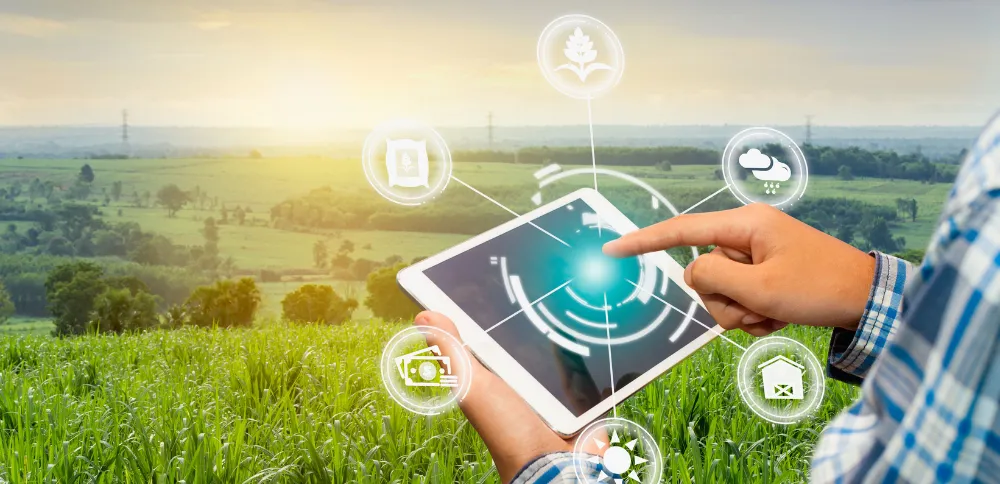
Precision farming can enable farmers to use technology for site-specific crop management. They can get real-time data on crops, soil types, and moisture levels for a variable rate of applications of inputs such as seeds, fertilizers, water, etc. Thus, they can manage resources more effectively, lower carbon dioxide emissions, and improve biodiversity.
No-tillage or minimum tillage is a conservation technology that can fight climate change in three ways:
Zero till machine, seed and fertilizer adjusting lever, and seed tubes are a few technological innovations that are making this possible.
Biotechnology can be leveraged to develop adaptive crops which are more resistant to droughts, floods, high temperatures, diseases, and other climate change stressors. These adaptive or genetically modified crops can be produced in larger quantities, albeit with lesser resources.
A study published on the website of the Food and Agricultural Organization of the United Nations states that climate change-induced pest dispersal threatens food security and one of the main drivers of biodiversity loss. Crop protection through safe and eco-friendly herbicides, fungicides, and insecticides can address this concern significantly.
Cover crop plantation is another proven way to control pests and diseases. Cover crops can also slow down soil erosion and regulate the moisture content in the soil.
The use of crop protection technology such as automatic spraying of agrochemicals through drones and robots is also picking up in fields.
Research published at the Yale School of the Environment highlights that extreme weather, increased rainfall due to climate change, and nitrogen inputs from more intensive agriculture can create nitrogen pollution. While nitrogen is a necessary nutrient for crops, an excess amount can contaminate soil and water which can reduce crop output.
Farmers can curb nitrogen pollution by adopting organic farming practices such as crop rotation, crop diversification, use of organic inputs, and composting plant and animal waste. Precision farming technology is another powerful approach to nitrogen management in agriculture.
It is becoming increasingly difficult to predict rainfall patterns due to global warming. Both excessive rainfall and prolonged dry spells can cause problems for farmers. Farmers can capture and store rainwater during heavy rainfalls through rainwater harvesting technology. They can use this water during droughts or insufficient rainfall. Rainwater harvesting is also a sustainable alternative source of clean water.
The agriculture sector is witnessing unprecedented changes due to climate change and the growing scarcity of natural resources. Digital technologies can address the pressing issues in agriculture substantially and make it more climate-smart, sustainable, and efficient.
Industry stakeholders and leaders need to collaborate to foster innovation in agriculture, provide a nurturing environment for these solutions to be tested and then evangelise them in them to make them mainstream.
The Syngenta Group Startup Accelerator program, part of the larger “Shoots by Syngenta” platform, provides early-stage companies with a supportive #ecosystem to develop new #agriculture #technologies. It includes giving #startups the opportunity to pilot their technology at Syngenta’s Farm of the Future and select grower locations globally, mentorship from our business leaders, the ability to connect with industry experts, as well as resources and funding to accelerate their growth and impact.
At Syngenta Group, we believe in #innovation and #collaboration. If you think you have what it takes, then we have the platform for you!
The Shoots by Syngenta Program is managed for Syngenta by Excelerate.

%201.webp)