There is no doubt that the sector has witnessed significant transformation in practices and techniques over the last few decades. However, this transformation has been mostly mechanical (powerful and efficient machinery) and genetic (more productive seeds and fertilizers) as highlighted by McKinsey & Company in one of its publications. To ensure food security for a growing population, the agricultural sector needs a strong digital transformation driven by creative innovation.
Deforestation to increase the land for cultivation is not a sustainable option. And hence, we need innovation to make agriculture more productive and sustainable.
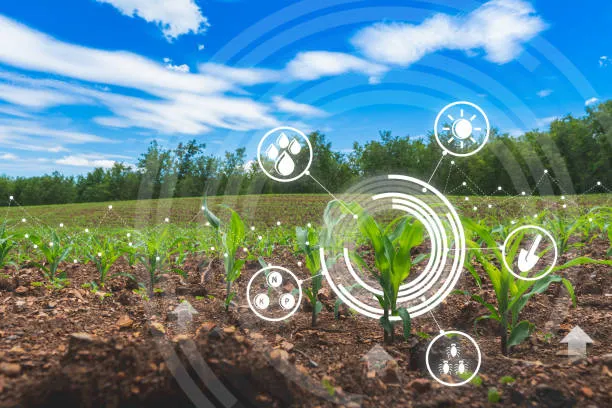
According to Food and Agriculture Organization (FAO), food production needs to rise by large numbers to feed a projected world population of 9.1 billion people in 2050. The lack of access to sufficient, safe, and nutritious food could escalate global hunger numbers and cases of malnourishment. This can further have a major adverse impact on the socioeconomic development of countries.
Innovation can increase agricultural production, lower food wastage, and improve food quality and safety.
Heat waves, drought, floods, erratic rainfall patterns, and other unpredictable weather changes lower food production and quality, and farm profitability. For instance, with higher temperatures and lower winter rainfall in Australia in recent decades, the risk of very low farm returns has doubled since 2000. It is important to note that lesser yield also translates into food shortage and higher food prices.
Innovation can help farmers improve farm productivity.
Though agriculture consumes around 70% of freshwater globally, it is facing a major water shortage due to the global water crisis. Agriculture makes up 50% of the world’s habitable land. About one-third of the world’s soil is moderate to highly degraded. With natural resources becoming scarce, the agricultural sector has to use less to grow more.
Food preferences and consumption habits of people are changing across the world, especially due to urbanisation. People are gradually shifting towards healthy, environment-friendly, and sustainable but diverse diets. These patterns have created a new set of food production and supply challenges for the agricultural sector.
The pandemic had a major impact on agriculture supply chains. The lockdowns compelled farmers and laborers to restrict their farming activities which resulted in lower food production and disruption in the supply chain.
Like with other industries, there is an urgent need to build resilience in agri supply chains too.
The scope of innovation in agriculture is vast. However, here are five areas where it can make a powerful impact:
Biotechnology and plant breeding technologies can be instrumental in growing different varieties of crops that are resistant to abiotic and biotic stress. Then, there are technologies such as tillage, drainage tiles, and soil and water sensors that can help farmers gain insights into soil conditions to improve crop production.
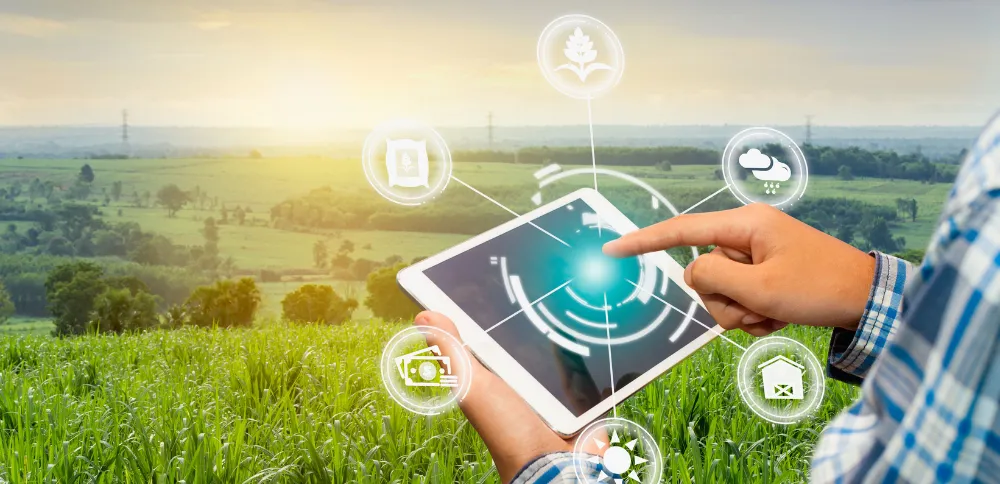
Precision agriculture leverages a combined power of Information and Communication Technology (ICT), Artificial Intelligence (AI), the Internet of Things (IoT), data analytics, and other sophisticated technologies for farm management. It enables farmers to utilize resources in the right amount in the right place at the right time in the right way for optimal sustainability, profitability, and land protection.
Agriculture is responsible for about 23% of anthropogenic (human activity) greenhouse gas emissions. The sector leaves its carbon footprints through electricity, machinery, fertilizers and pesticides, heavy water usage, stubble burning, and livestock management.
The world needs sustainable farming technologies to produce crops with minimal impact on the environment.
The integration of digital tools into agriculture can enable easy sharing of information, improve the supply chain, monitor waste production, increase yield, make informed decisions in real time, and enhance predictive capabilities to plan for unexpected changes.
Natural resource depletion is a stark reality. The need of the hour is to cultivate food with fewer resources. Innovative farming techniques can help farmers food supply while reducing energy use.
The agricultural sector is on the cusp of a paradigm shift. Innovation through cutting-edge technologies can modernize agriculture in unprecedented ways. It can solve the world’s food security and environmental concerns while boosting farmers’ income. Doing more with less is the future mantra for agriculture and innovation is just the right way forward.
The Syngenta Group Startup Accelerator program, part of the larger “Shoots by Syngenta” platform, provides early-stage companies with a supportive #ecosystem to develop new #agriculture #technologies. It includes giving #startups the opportunity to pilot their technology at Syngenta’s Farm of the Future and select grower locations globally, mentorship from our business leaders, the ability to connect with industry experts, as well as resources and funding to accelerate their growth and impact.
At Syngenta Group, we believe in #innovation and #collaboration. If you think you have what it takes, then we have the platform for you!
The Shoots by Syngenta Program is managed for Syngenta by Excelerate.

%201.webp)